Assignment five: Personal project

Of Many Worlds

Of Many Worlds is a creative exploration into cymatics (Jenny, 1967), where light and fluid, make sound vibrations visible. Using macro photography draws the viewer into new tiny worlds, capturing beauty and detail that is hidden from the naked eye. The title is inspired by a 17th Century Poem by Margaret Cavendish, Of Many Worlds in this World, which suggests the possibility of new tiny worlds within our own world (Rumens, 2012). An appropriate theme for this exploration into this universe of macro worlds and cymatic images.

Presented as a slide show of images, the transition of images reveals new colours and shapes emerging organically. Built on minimal material, the music uses the same compositional principals with overlapping sounds, and textures. The choice of synthesiser sounds evokes an other worldly atmosphere through the Alchemy (Logic Pro User Guide, n.d.) synthesiser.

Project Research

This is a project that grew from the restrictions of lockdown. My initial ideas relating to music and musicians, creating links with sound and image, Without access to people outside my household my research turned to how artists were using sound to create images. This generated a list of ideas to investigate (some of these are bookmarked for later exploration), including Chladni patterns generated by exciting a metal plate (Taylor, 1989), and the work of Hans Jenny (1967) who used the term cymatics to describe how the vibrations of sound affect powders such as sand and liquids.

Testing

With limited instructions available about how to set up your own cymatics rig at home, the project required experimentation. The final set up uses a loud speaker with the cover removed placed on its back powered by an amplifier. A thin plastic lid is attached to the speaker cone. The container with fluid is placed on this (see image cymatic rig set up). Sound is generated through a tone generator app on a phone or laptop. Two ring lights are used, one white, and one RGB light.

Cymatic rig set up

Finding the setting where the vibrations created meaningful patterns and shape is a balance of the amplitude, size of container, frequency, and viscosity of the liquid. This provides seemingly endless challenges and opportunities. Even if the settings were not right for a symmetrical pattern, striking shapes and textures emerged.

The placement of lighting at the correct height is crucial for observing the patterns created by the water. An overhead tripod was essential for the camera and achieving consistency. Different colours for the fluid were achieved through using different liquids, and food colouring. Though these images can be captured with a standard lens, or even an phone camera, a macro lens with 1:1 magnification allowed more detail to be captured.

Different patterns required specific camera settings. For example, many of the symmetrical patterns worked well with a slow shutter speed. The more random patterns were more effective with a fast shutter speed. A cyclical reflective approach with planning, practical work, reflection and learning was an essential part of the process.

A file naming convention identifying the date, frequency, and fluid was essential to be able to track the hundreds of photos that were taken as part of the testing stage of this project. Also invaluable was my project notebook in Evernote, for recording ideas, progress, and links to resources.

Presentation

One of the attractions of this project was to create a multimedia piece of art, that could be easily shared online. Something that is very relevant at the time of writing when a conventional exhibition would be out of the question. However, I do look forward to being able to see view this screened on a large projector at work in a performance space.

The intended audience is broad. It could appeal to people with an interest in cymatics, the science of sound, photography, art, and music. It has been shared on social media and created interest with other artists and potential future collaborations.

Equipment

The equipment used is listed below

  • Canon 5D Mark III
  • Canon EF 100mm f2.8L
  • Newer RGB Ring light, standard small white ring light
  • Overhead tripod
  • Denon Amplifier
  • Loud speaker
  • Tone generator (app)
  • Macbook Pro
  • Various circular containers of different sizes (dariole moulds, bottle tops, jar lids etc)
  • Fluids (water, rubbing alcohol, coffee)
  • Colour additives (food colouring, glitter)
  • Post production, Adobe Lightroom, Adobe Photoshop, Adobe Premier Pro, Logic Pro X

Skills and practice

The project required a range of skills including macro photography, lighting, and using the camera in manual mode. Autofocus was not very successful, manual focus and zooming in on the image to focus produced better results. A tripod was essential for consistency.

An integral part of these images is the lighting, which highlights the patterns in the water and also provides reflections. The height of the light is crucial in getting the right effect. The images with more than one colour in the reflections are created with a second RGB ring light.

Post production

Post production took place in Adobe Lightroom, followed by Photoshop to crop the image to the edge of the container with the fluid. A square black background was created as a template for consistency of presentation. Minor adjustments to the balance of highlights, shadow, whites and blacks were made to ensure consistency, and the texture increased for clarity.

Key decisions in creating the video were the length of images, transition times, and the order of images. An influence was Lapis, a short film by James Whitney (1966) a computer aided animation creating mandalas. From the early stages I knew that I wanted to come full circle and return to the initial image so the video could be used for an installation and loop continuously if required.

Initially a temp track was used as a guide to mood of the images with the Music composed once I had a draft version of the video. However, it was always intended as an integral part of this project and ideas for the style were forming throughout the video assembly process. The dynamic shape, harmonic tension and resolution shadow the presentation of the images.

Conclusion

This project is the final assignment in the Foundations in Photography course. It has taken nearly two years to complete the course and I am aware as to how much the course has developed my photographic practice. It is now much closer to my other creative work as a composer with research and practice informed by the work of other artists working in a range of genres. Throughout this project I kept an online notebook logging ideas and progress, a practice adopted during the course.

My original aims for the course were to explore the creative use of light, increase my knowledge of the work of other photographers, develop Photoshop skills, and tell a story or express a concept through images. In my self my reflection for part 4 (Gourlay, 2020), my aims had developed, for example, to look at how other art forms influence photography, and identified the use of mixed media and abstract art as interests. Key elements I aimed to include in my work included the creative use of lighting, patterns and shapes, light and shadow, and exploration of colour. This development is reflected in my final assignment, something that I would not have envisaged creating two years ago when I started this course

References

GOURLAY, K. 2020. Research point – Self reflection [Online]. Available: https://wordpress.com/post/karenfip.home.blog/901 [Accessed 17 Dec 2020].

JENNY, H. 1967. Cymatics, Basilius Presse.

LOGIC PRO USER GUIDE. n.d. Logic Pro Alchemy overview [Online]. Available: https://support.apple.com/en-gb/guide/logicpro/lgsi2618652a/mac [Accessed 8 Dec 2020].

RUMENS, C. 2012. Poem of the week: Of Many Worlds in This World by Margaret Lucas Cavendish [Online]. Available: https://www.theguardian.com/books/2012/jul/02/poem-many-worlds-margaret-cavendish [Accessed 12 December 2020].

TAYLOR, C. 1989. Demonstrating Resonance with Chladni Figures – Christmas Lectures with Charles Taylor [Online]. Available: https://www.youtube.com/watch?v=OLNFrxgMJ6E [Accessed 13 November 2020].

WHITNEY, J. 1966. Lapis [Online]. Available: https://www.youtube.com/watch?v=kzniaKxMr2g [Accessed 11 Dec 2020].

Assignment four: Responding to a theme

Variations on a theme

Variations on a theme

Variations on a theme, is a creative response through the medium of still life to the Covid-19 restrictions in the UK. This period for me was characterised by restriction, repetition, and rainbows, drawings of which seemed to be in almost every window. These three elements combined to influence the choice of objects, presentation, and colours. Each image presenting a variation on the theme of repetition, using restricted colours and objects. The project developed from an initial exploration of colour to be refined into a more complex response to the restrictions and repetitive nature of lockdown.

Influences

The images have a number influences for example Laura Letinsky’s use of real and printed versions of objects (reference), spirals from Andy Goldsworthy’s land art installations (Goldsworthy, 2019), and Andy Warhol’s use of repetition (MoMALearning). Perhaps a less obvious influence to the viewer is the preparatory course work, in particular, work from Project 1 Experimenting with still life, and Project 2 Combining images, objects and concepts. Both of these had an impact on the experimental approach, combinations of objects, and final presentation.

Choice of background, subject and objects

During lockdown access to materials was limited so each image uses objects that were easily available at home, but aims to find beauty out of something ordinary. Though the preparatory work trialled different layouts with a number of items of the same colour, I was drawn to objects and backgrounds that could be used to create patterns. The backgrounds use a variety of objects including coloured card, a mirror, a chair, and in the only image to use layers (the sunflower), sliced lemons provide the texture to subject.

Choice of colour and light

To create strong colours, where possible, the images were shot in bright sunlight and processed in Lightroom and Photoshop. The choice of colour was inspired by the colours of the rainbow However, in keeping with the rainbow, the images use a range of individual colours rather than a solid block. Throughout history, the rainbow has been used to represent different hopes and ideals, with most recently in lockdown, support for the NHS, combined with the more traditional symbolism of faith and hope, which is very relevant for today’s situation.

Interaction with the viewer

Underpinning each image is the framework of repetition, though the placement of the objects and in their presentation. The presentation in a grid could highlight the sense of restriction by being viewed as bars or as windows looking in on the objects. Each image interprets the theme of repetition in a different way, with the use of colour, objects and composition. However, I would not want to impose an interpretation on the viewer and would be happy for them to create their own impression of the images. Larger versions of the individual images can be viewed at Variations on a theme.

References

GOLDSWORTHY, A. 2019. Andy Goldsworthy Digital Catalogue: Home [Online]. Available: https://www.goldsworthy.cc.gla.ac.uk/ [Accessed 22 Oct 2019].

LETINSKY, L. Laura Letinsky [Online]. Available: https://lauraletinsky.com/ [Accessed 2/11/20].

MOMALEARNING. Campbell’s Soup Cans, Andy Warhol [Online]. Available: https://www.moma.org/learn/moma_learning/andy-warhol-campbells-soup-cans-1962/ [Accessed 2/11/20].

Assignment three: A narrative photograph

For assignment three, I chose the second option creating a narrative sequence that tells a story in a series of images. Larger versions of the images can be viewed at the end of this post.

Entitled Capture, the series initially appears to be a straightforward story of a person taking (capturing) a photo of balloons for a framed picture on a wall. However, all is not what it seems with the final image showing the photographer imprisoned behind the frame looking down at the balloons which are free again.

The intention is for the viewer to make up their own mind about whether this is just a playful series of images or to perhaps raise deeper questions about reality and the act of taking an image.

Research and planning

In my research for the series I looked at range of photographers and their approach to series, most notably Duane Michals, whose use of series and humour strongly influenced this assignment. I was drawn to images that question reality and also looked at the influence of surrealism on photographers such as Man Ray. Research and references relating to this assignment can be viewed in my Learning Log posts

In addition, I created Pinterest boards as a visual notebook to record photographs and paintings (notably René Magritte) of interest , and planned a list of ideas for the series and props before settling on the final idea. The balloons were a deliberate choice of prop as they are associated with fun and playfulness, and bring strong colour to an otherwise limited colour palette. Sketches were created and the composition of the images were planned on paper. Test shots were taken to experiment with different poses, so the final sequence could be shot in a short space of time.

The original plan was to use a printed A3 image for the two shots that use a framed image. Due to the life of the balloons (10 hours), this was not possible and Photoshop was used to place the the image in the frame.

Five images were used to create the final series of three.

  1. The subject taking a photo of the balloons on an iPhone
  2. A photo of the balloons for the frame
  3. The subject hanging the frame containing the photo of the balloons
  4. The subject trapped behind the frame
  5. The subject trapped behind the frame, looking down at the balloons

Reflection

I found this a rewarding experience and enjoyed how this assignment built on the skills that have been introduced through the first three sections of the course. The assignment showed how my approach has changed with research and planning, and also to have a much clearer idea about working with and directing people. An example of this is the shot of the subject trapped behind the frame. This was shot with with glass removed from the frame to avoid reflections. To get the expression I wanted, I moved the balloons so the subject was actually looking at them.

Overall, I am pleased with how the photos work together as a coherent set. I experimented with landscape and portrait formats, before deciding on a square layout as this had a pleasing balance of content and empty space and worked well for displaying the final three images beside each other. Another technique to help the images work together was to start close up to the subject and move away with each shot until the final image reveals the twist in the story.

The advance planning paid a large part in how the photos work as a series. It was good to have a number of different ideas that could be refined. Sketching ideas for composition was a new experience and saved time when it came to shooting the series. The test shots for the subject trapped in the frame were informative in identifying useful poses and also the importance of shooting the subject against the correct background, and to find a way of cutting out reflections from the glass. Though I could have used a polarising filter, in the end a quick and easy solution was to shoot the images with the glass removed from the frame.

Areas I would like to develop include lighting, communication of ideas, and recording my research. To try to achieve consistent lighting across the images, I used a Canon Speedlite with a bounce adaptor and the light bounced off the ceiling to create a softer light. I am aware that lighting is one area where I have limited knowledge and is an area to strengthen. I would have liked to have been able to communicate the concept of what I was aiming for more clearly to the subject, who loved the final photographs, but didn’t really understand what I was aiming for until seeing the finished product. It would have helped to have written out my bullet point of ideas into a short paragraph. Revisiting my notes with benefit of hindsight, I would have liked to make greater use of my learning log in recording my preparation for this assignment and also other related work that supports my development.

In conclusion, this was a thoroughly enjoyable section of the course and assignment, and as I have noted elsewhere in my course material, I am noticing a change to my practice. I find it interesting that my approach is now much more similar to composing music, with research, drafts, experimentation, and refining. One of my initial development points was to be able tell a story or express a concept through images and the series of images for this assignment are something I would never have conceived a year ago when I started the course.

Development Points

For my development I have identified the following points from things I have learned during this assignment

  • Continue to develop my knowledge of the work of other photographers
  • Look at how other art forms influence photography
  • Create more regular learning log posts to consolidate my learning and research (approximately 500 words per post).
  • Research the use of flash.
  • Plan how I will communicate my ideas to models I am working with.
  • Ambiguity can be good, the photos should be able to speak for themselves without being over reliant on descriptive titles or text.
  • To continue to get feedback on my work from a range of people including my tutor, fellow students, and other people (including photographers and non photographers).

Last updated 1 Jan 2020

Assignment two Painting with light

Using light painting for this assignment required trial and error to produce the final selection of six images, which were shot over two separate sessions. My research for this assignment included looking a night photography portraits. I was particularly drawn to the simplicity of black and white minimalist images where only part of the subject is revealed.

The final selection of six images below were taken using a tripod, long exposure and a torch with a tube of cardboard taped over the end acting as a snoot. A black background was used and the images were shot at night. Lots of trial shots were needed to get the length of exposure correct and the subject in focus between shots.

Experiments

In addition to the trial and error of the exposure time, the contact sheets show different areas highlighted, different poses, and movement. The image below experiments with movement, creating a ghostly effect as the hands were moved half way through the exposure and the light leak from the torch adds to the effect.

Post Processing

Images were initially processed in Lightroom with Photoshop used for dodging and burning putting into practice the techniques from Project 4.

Presentation/Exhibition

Before looking at the way Annette Message hung her photos for My Vows, and Wofgang Tillmans’ approach to displaying his work, my plan was to print all the images at the same size and present them in conventional pattern on the wall. Inspired by alternative approaches to displaying work I used an actual piano to display the images. Another change from the original plan was the use of smaller images for the pictures of hands. The black and white of the piano complements the monochrome images.

Final Exhibition Arrangement

In reality, a piano though fun is not the most practical way to display work. More conventional layouts, placed on the piano lid though suitable for a wall are shown below.

Alternative Exhibition Arrangements

Having completed this assignment, where my intent was for a collection of minimalist images, I would like to develop this work by experimenting with colour, and more use of props and movement. I was struck how my choice of images changed once they were presented as part of a set and also how the printed image was different from the computer screen. Contact sheets showing all the photos taken for the assignment over two sessions can be downloaded below.

Contact Sheets

Assignment One: Traces

A set of images showing the impact of people past and present on the environment in a small Dales village to the west of Pen-y-ghent

Taken over two days in February 2019, these images capture traces that humans have left in Horton-in-Ribblesdale. The traces, however, are more than just the result of human actions, as the surrounding landscape, has had a direct impact on the way people live, work and visit the village. The images, all taken with a wide angle lens, depict traces of human activity, but in the wider context of the landscape.

Many of the traces relate things that have been built by people (e.g. housing, the bridge, the church), whereas others relate to the working environment around the village (e.g. farming, and quarrying). Perhaps more visible reminders of people occur in the images with the gravestones and with footpath erosion, but the focus of these images is on the trace left behind rather than the people.

Horton was mentioned in the Doomsday book of 1086. The earliest building is the 12th Century Church of St Oswald. Much of the original Norman church still exists. The Tower was added in the 14th and 15th centuries. Pen-y-Gent can be seen in the background.

St Oswald’s Church with Pen-y-ghent in the background


The centre of the village is on the river Ribble, which is the only river that starts in Yorkshire that flows to the west. The New Inn Bridge was built in the late 1700s and is a Grade II listed building. Today, the bridge is too narrow for pedestrians and traffic and a separate footbridge has been built.

On the route from Settle to Carlisle, Horton-in-Ribblesdale station opened to passengers in 1877. Today, passenger trains run approximately every two hours from Leeds to Settle. The trains climb an incline of 1 in 100 from Settle to Horton-in-Ribblesdale, and spectacular views await those on the journey. The station signs (also on an incline!) are almost overshadowed by the view of Pen-y-ghent in the background.

Horton-in-Ribblesdale Station Signs

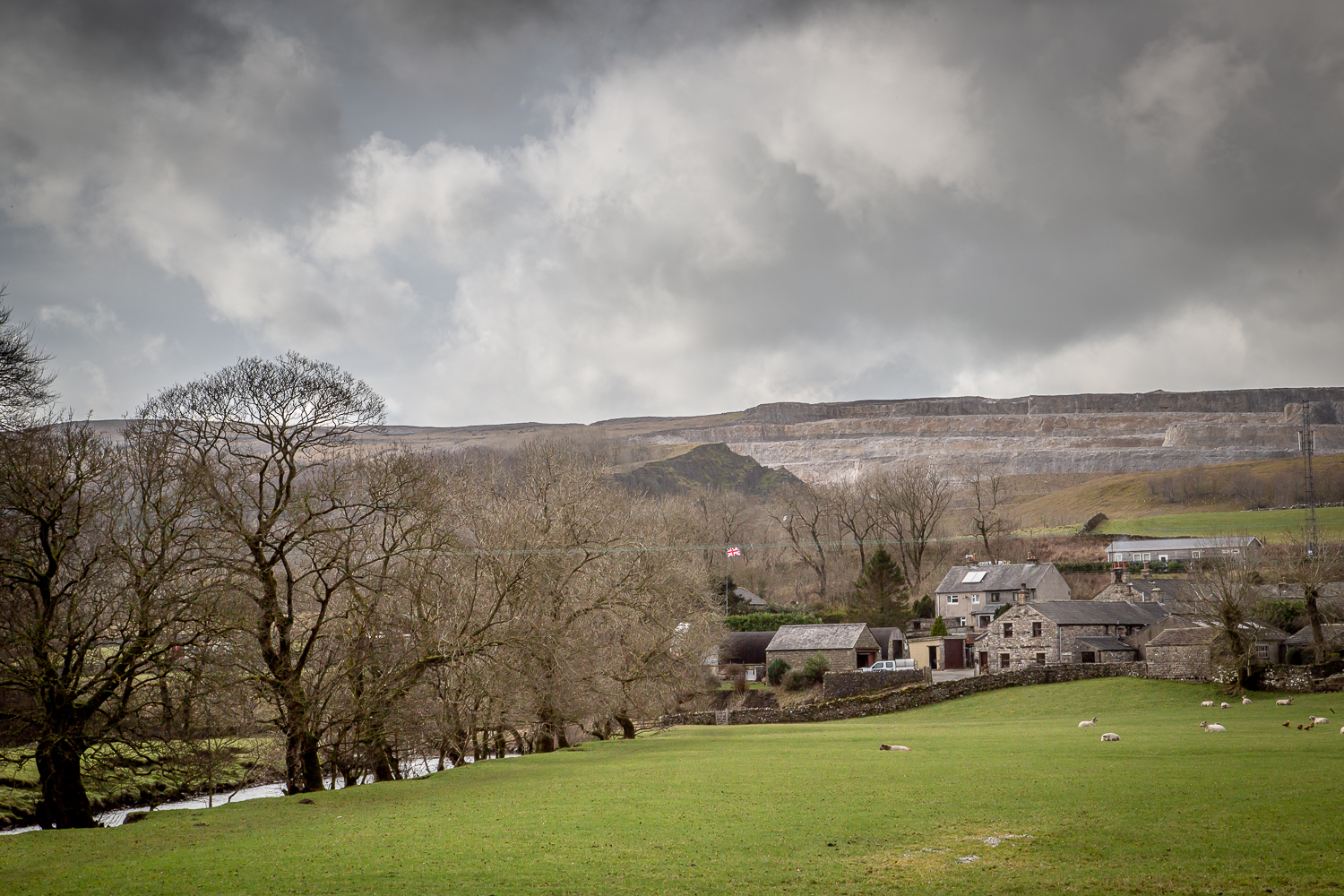
Next to the station and overlooking the village, Horton Quarry opened in the 1880s and limestone has been extracted up to the present day. The current owners, Hanson, believe that there is enough material for the next 70 years. After this, the site will be returned to grassland.

Horton-in-Ribblesdale and Horton Quarry

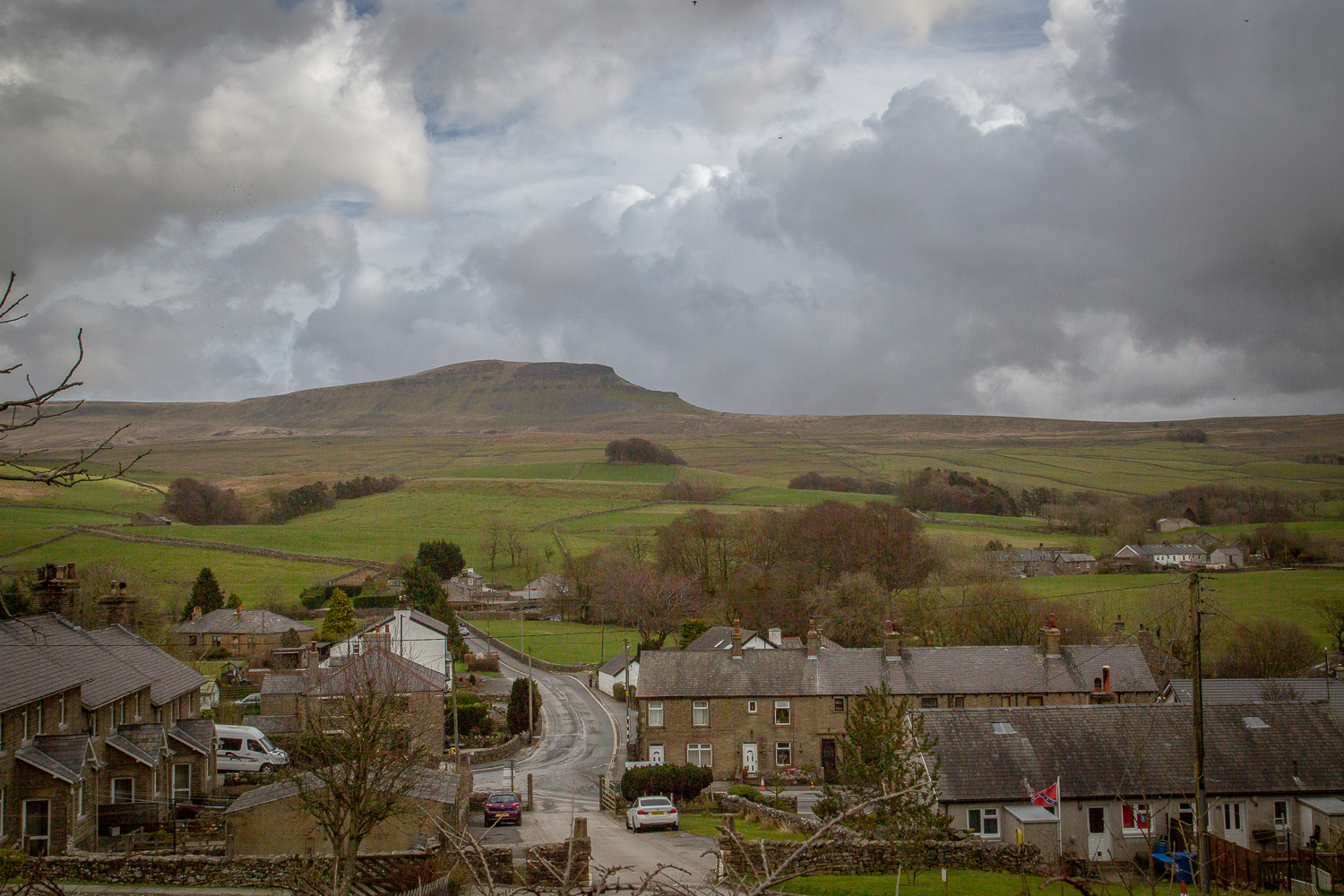
Both the Station and quarry affected the size of the village. Victorian terraces were built near the station, and later cottages for the Quarrymen. Viewed from the station village can be seen following the road ahead and round to the right.

Horton-in-Ribblesdale viewed from the station

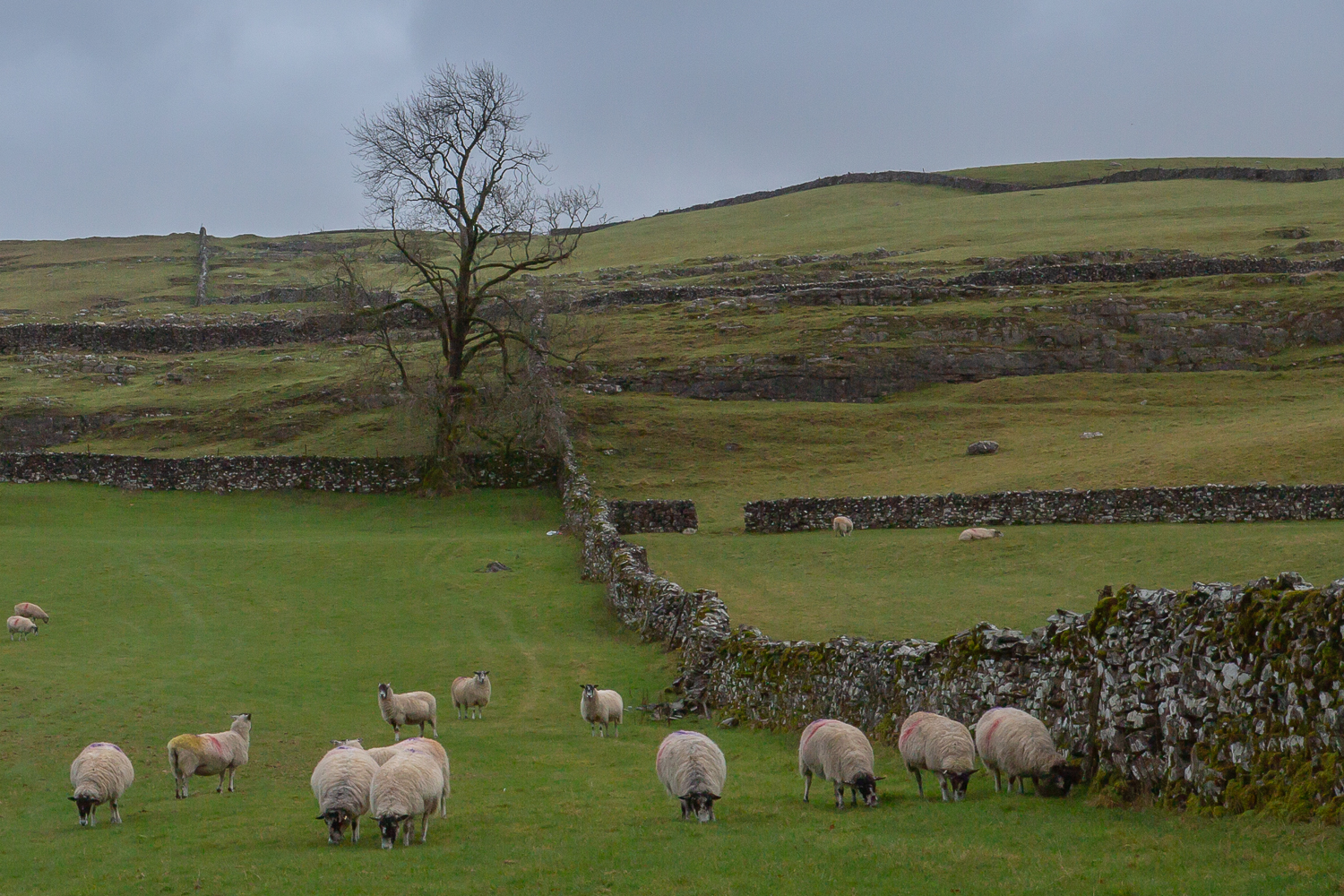
In addition to quarrying, there are many hill farms in the region. This is a vital part of the local economy and also the appearance of the countryside surrounding the village. Without hill farmers and grazing livestock, the area would be mainly scrubland or woodland.

Hill Farming above Horton-in-Ribblesdale

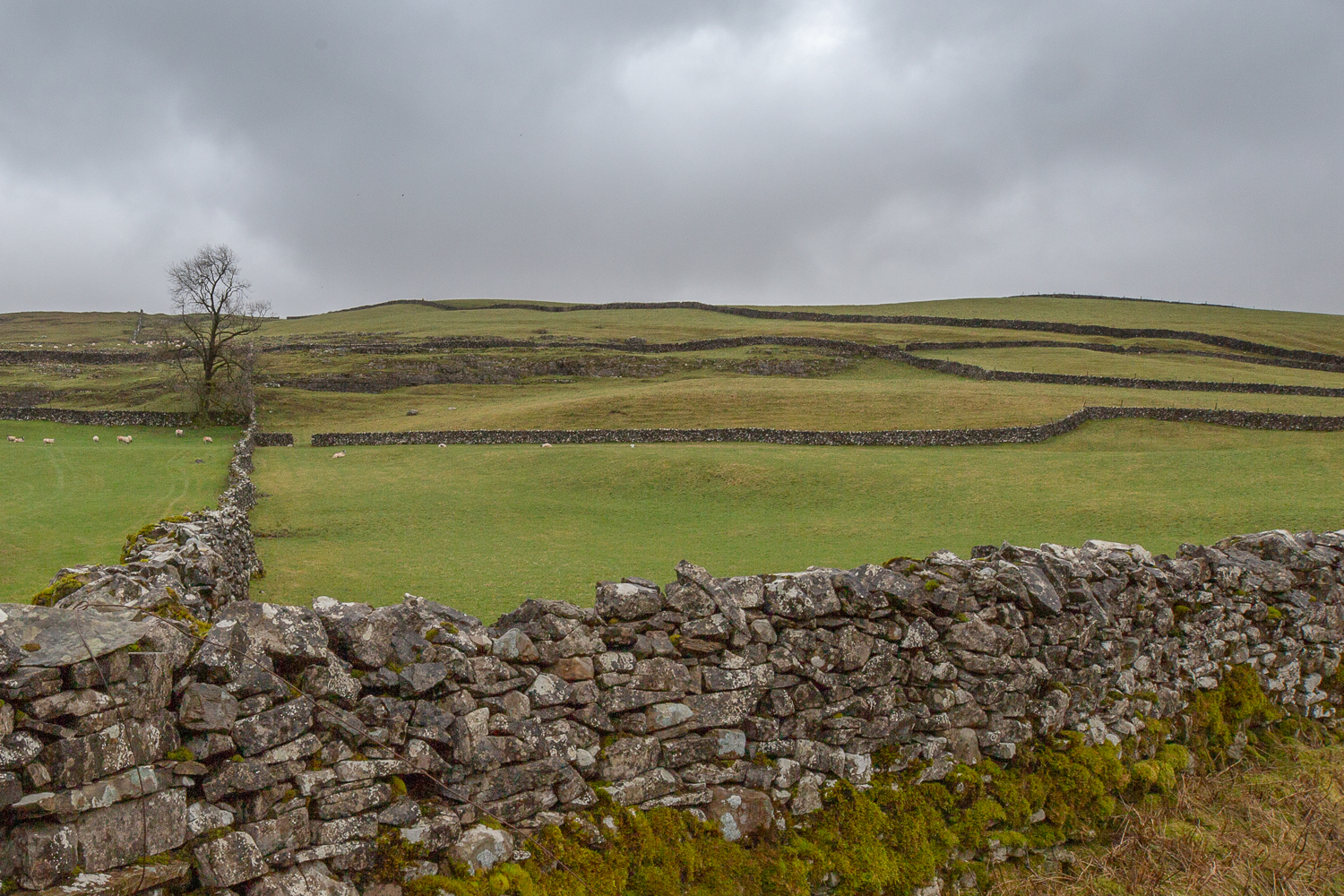
The countryside surrounding the village has a criss-cross of dry stone walls. There are estimated to be over 5000 miles of these walls in the Yorkshire Dales with some over 600 years old.

Dry Stone Walls above Horton-in-Ribblesdale


For many people, Horton-in-Ribblesdale is best known as the starting point and finishing point for The Three Peaks walk. The Pennine Way and Ribble Way also go through the village.


Public Footpath from Horton in Ribblesdale linking to one of the main routes to Pen-y-ghent

Pen-y-Ghent is a major attraction and footpaths are well worn. At busy times the village struggles to cope with the numbers of people. The National Parks Authority is looking at ways to alleviate the problems of coping with the thousands of visitors who participate in the Three Peaks Walks.

A well used footpath down from Pen-y-ghent at Brackenbottom

Many of these images have no reference to the 21st century and may evoke a sense of not being affected by the passage of time. I came away from this project with a sense of how the traces of people living, working and visiting this village are inextricably linked with the environment itself from the industrial quarry to the striking beauty of Pen-y-ghent. It will be interesting to see how people manage today’s challenges such as global warming and effect of increased tourism, both of which have the potential to have a high impact on the environment and affect the traces that people in the present leave for future generations.